


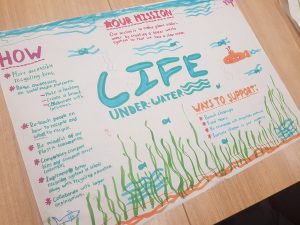
 Ever wondered how to integrate real-world learning experiences in classroom settings to enhance digital literacy skills? Here’s a sneak peek into a recent project with a group of teenagers that aimed to achieve just that.
Step 1: Setting the Stage
We began by working with the teens, using an online multiple-choice questionnaire, to identify their natural ‘genius’, skills and capabilities. Each student received a personalised report that helped them to understand their ‘genius smarts’. We also introduced them to a learning framework to guide them through a process of learning so they could explore any real-world topic of their choice.
Step 2: Real-World Scenarios
Next, we provided an introductory lesson that incorporated real-world scenarios. This allowed students to see that other young people like themselves began to ‘think global and act local’ to start projects that changed the way we do things in the world. For example, Bye Bye Plastic Bags and The Ocean Cleanup. Allowing students to then brainstorm meaningful topics they were concerned about in our world provided the starting point for them to identify a problem that needed to be solved. To inspire them we explored the 17 Sustainable Development Goals.
Step 3: Explore the Possibilities
We encouraged students to take the time to identify at least 8 key search terms to help them find more relevant information when searching online. We introduced them to several different search tools and databases, curation, note-making and synthesising strategies. This provided them with some structure and the flexibility to choose something they felt confident with to explore and capture the information they needed to solve the problem they identified. We also introduced different ways they could present their persuasive message to have an impact on their real-world audience.
Step 4: Student-Centred Approach
At the heart of our project was a focus on student autonomy. Students were encouraged to explore, experiment and learn from their mistakes. This hands-on approach provided them with invaluable experiences.
Step 5: Continuous Monitoring and Assessment
Finally, we monitored and assessed students’ digital literacy regularly, tracking their progression and growth over time. This helped us to tailor our teaching methods to the specific needs of each student.
This project underscored the value of incorporating real-world learning experiences in the classroom to improve digital literacy skills. Not only did it make learning more engaging for students, but it also led to a significant increase in their understanding and application of the skills.